
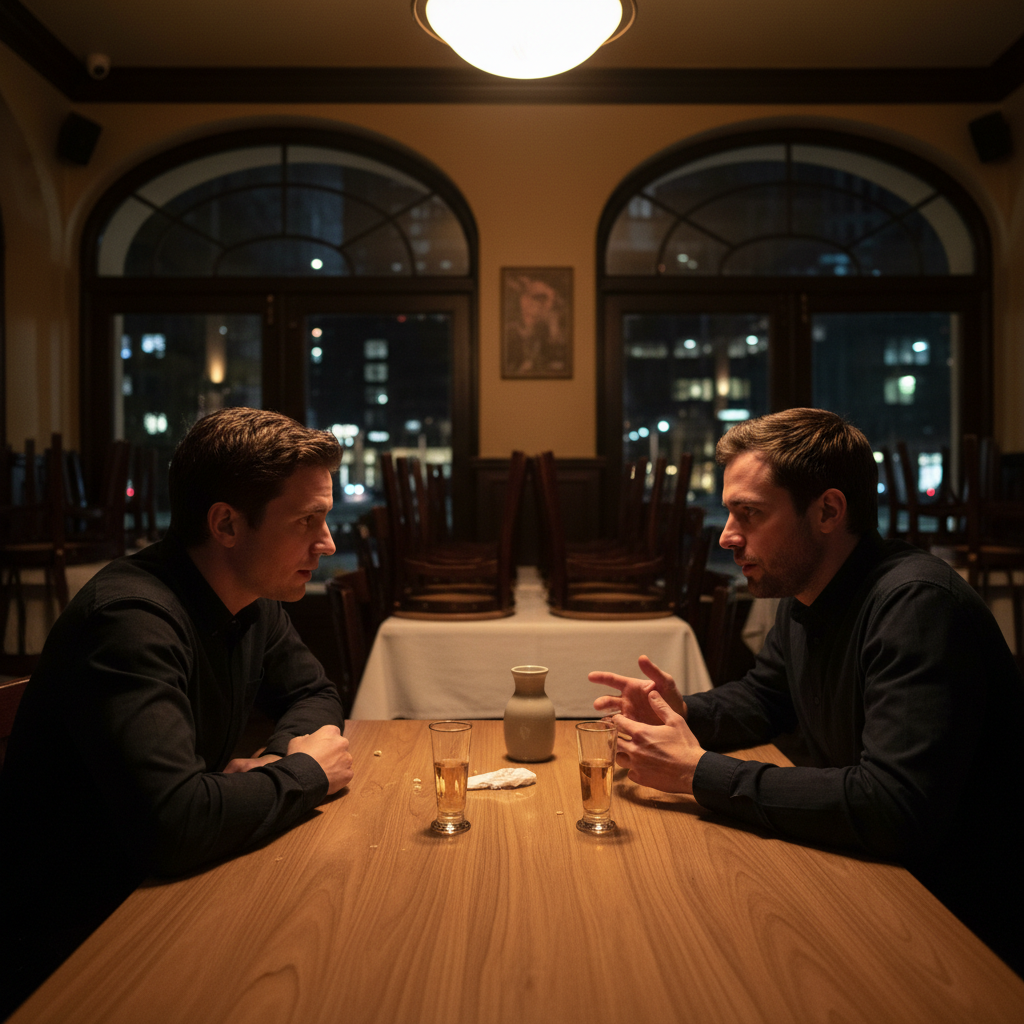
Two people in deep conversation at a restaurant table after hours, warm overhead lighting, plates cleared except for small glasses
Season 3 · New Episode Every Monday

The stories the menu doesn't tell.

Sourcing calls at 4 a.m. Handshake deals at regional trade shows. What happens when a supplier folds overnight. The food industry, unfiltered.

3 Seasons
of industry truth
140+
episodes published
62k
weekly listeners
Supply Chain RealitiesFarm-to-Table EconomicsThe Broker Nobody Talks AboutWhen Your Produce Guy DisappearsNegotiating Freight in Q4The Vintage No One BoughtMenu Engineering After InflationCold Storage PoliticsThe Last Independent DistributorFlavor Forecasting 2026Supply Chain RealitiesFarm-to-Table EconomicsThe Broker Nobody Talks AboutWhen Your Produce Guy DisappearsNegotiating Freight in Q4The Vintage No One BoughtMenu Engineering After InflationCold Storage PoliticsThe Last Independent DistributorFlavor Forecasting 2026
Dispatch No. 141February 17, 2026
"The distributor told me Tuesday. I had a dinner service for 180 covers on Friday. You learn real fast who actually picks up the phone."
— Rosa Ferrante, Executive Chef, Osteria del Faro, Charleston

When a mid-size regional distributor serving the Southeast folded with 72 hours notice last October, thirty-seven restaurants scrambled to rebuild supply lines mid-season. Rosa Ferrante was one of them. What followed wasn't a crisis — it was a masterclass in the informal networks that actually keep kitchens running.

In this episode, Rosa walks through every call she made that week, the favors she cashed in, and the two relationships she built in the chaos that have since become her most reliable sourcing channels. There's a reason the best operators keep a second list.

38%
of independent restaurants

reported at least one primary distributor disruption in 2025, up from 21% in 2023. The restaurants that recovered fastest shared one trait: redundant sourcing relationships built before the crisis hit.

Source: Independent Restaurant Coalition, 2025 State of Supply Report

60-Second Clip · The Call That Saved Service

Rosa Ferrante on the call that saved Friday service

Dispatch No. 141
0:001:02
Dispatch No. 139February 3, 2026
"I drove six hours to a trade show in Louisville to meet a grain broker face to face. That's how you get the price nobody else gets."
— Marcus Webb, Founder, Fieldwork Grain Co., Kansas City

Marcus Webb spent eleven years as a commodity broker before walking away to start a specialty grain company with $40,000 and a leased truck. His first year nearly ended him — a late frost, a buyer who went dark, and a storage facility that flooded in August. He kept a notebook through all of it.

This episode is that notebook, read aloud. Marcus goes entry by entry through the worst six months of his business life, explaining every decision, every mistake, and the single conversation that turned things around. It's the most honest hour we've recorded.

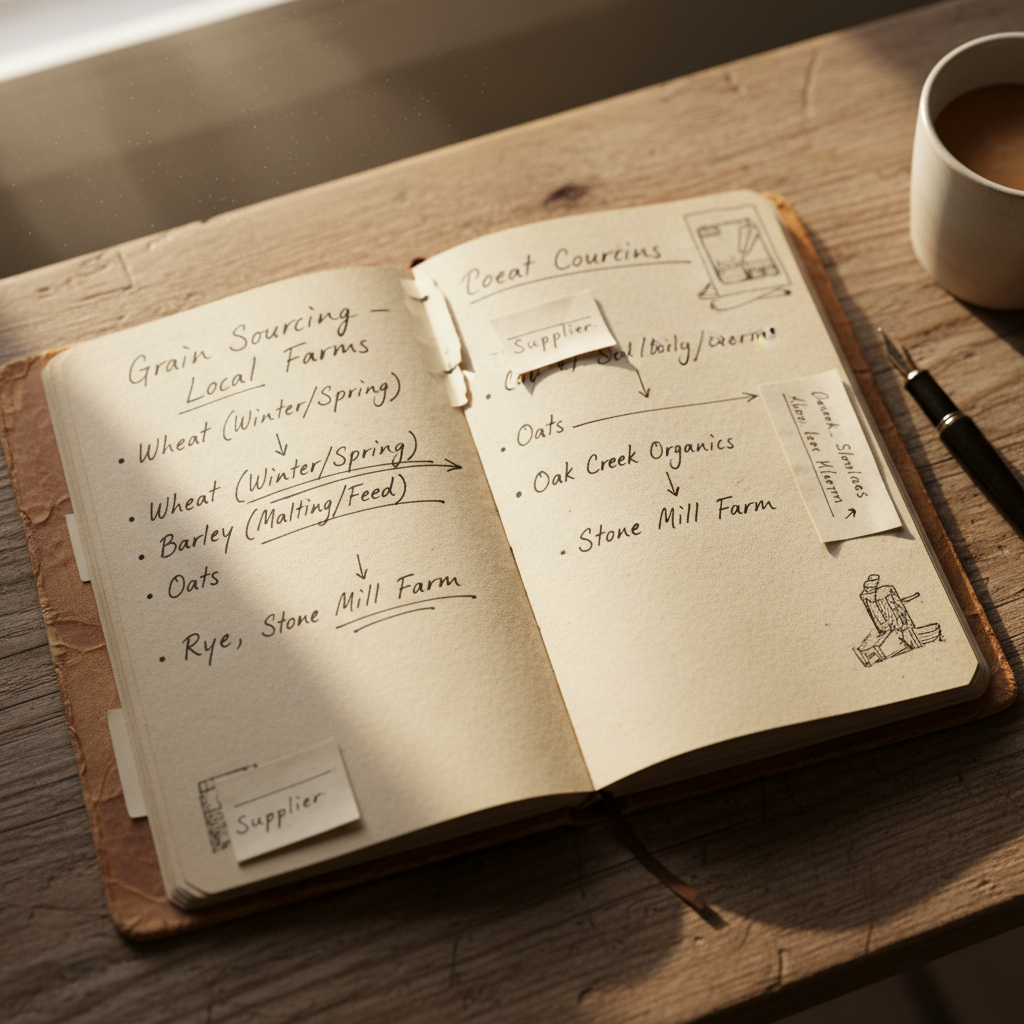
Worn notebook open on a wooden table with handwritten notes about grain sourcing, morning light coming through a window

Marcus's sourcing notebook, 2019–2020. He still carries it.

From the episode

"The worst night of my first year? I was sitting in a parking lot in Wichita at 11 p.m. eating gas station food because I couldn't afford the hotel. I had $800 in the business account. I had a call with a buyer at 7 a.m. I called my wife and told her the truth for the first time. That conversation is why we're still here."

— Marcus Webb, Ep. 139

60-Second Clip · The Parking Lot Call

Marcus Webb — the night he called his wife from a parking lot in Wichita

Dispatch No. 139

0:000:58
Dispatch No. 137January 20, 2026

Trend Report

The flavors that are moving product right now — and why most brands are still sleeping on them.

+284%
Menu appearances YoY
Fermented Black Garlic
+196%
CPG product launches
Smoked Koji
+171%
Foodservice placements
Calabrian Chile
+143%
Recipe inclusions
Preserved Lemon

Nadia Okonkwo has spent fifteen years as a flavor forecaster for a mid-size CPG consultancy that you've never heard of but whose work you eat every week. She tracks the 18-month lag between what's happening in regional chef communities and what eventually lands on a supermarket shelf.

In this episode, Nadia explains why the brands winning in 2026 started watching taqueria menus in 2024, and why the flavor trend cycle is compressing in ways that are breaking the traditional forecasting model. She also names three ingredients that are about to cross over — and the supply constraint that could derail each one.

"By the time something gets a Bon Appétit feature, the window for a brand to own it is already closing. You need to be in the restaurant two years before the magazine."
— Nadia Okonkwo, Flavor Forecaster & CPG Strategist

60-Second Clip · The 18-Month Lag

Nadia Okonkwo on the 18-month lag between kitchens and shelves

Dispatch No. 137

0:000:55

The Dispatch Brief

Get the Brief
Every Monday.

One email. The key insight from the week's episode, one supply chain stat you can actually use, and a single sourcing question worth asking your rep this week.

No noise. No sponsors. Unsubscribe with one click.

14,200+
subscribers
62%
open rate
4.8★
avg. rating
Got a story worth telling?

Submit
Your Story.

Every episode starts with someone who knows something the industry hasn't said out loud yet. If you've been in the room where real decisions get made — the sourcing call, the negotiation, the supplier failure, the pivot — we want to hear from you.

We don't want polished PR pitches. We want the version you'd tell a colleague over a drink after service. The honest one.

You've been inside a supply chain decision most people don't see

You have a number, a story, or a failure that changed how you work

You can talk for an hour without checking your talking points

We read every submission. We respond to the ones we can use.